
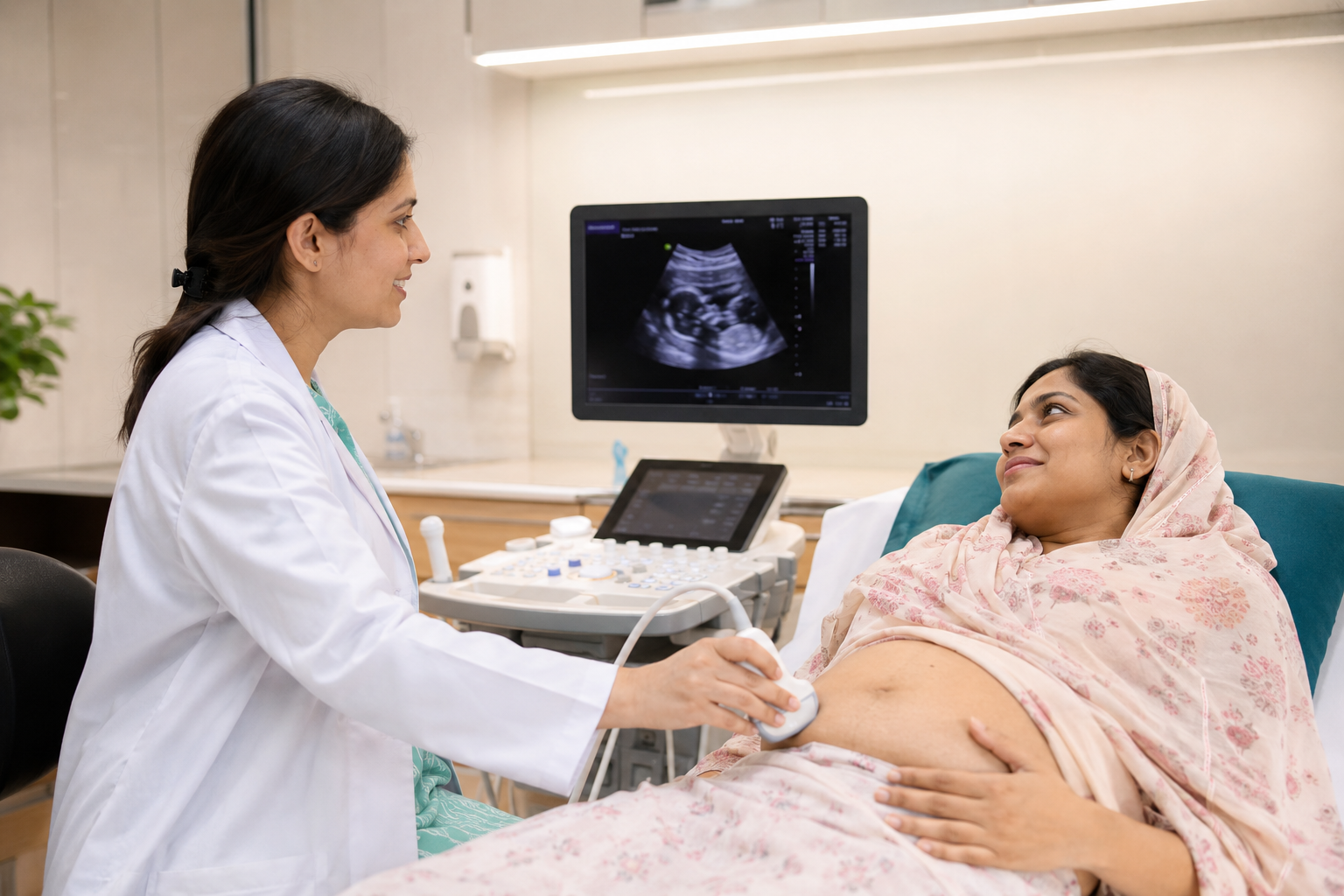
High-Risk Pregnancy Care
A high-risk pregnancy needs closer monitoring and specialised care to protect the health of both mother and baby. Dr. Rabeya Sultana provides comprehensive fetomaternal management for pregnancies complicated by pre-existing conditions, prior complications, or issues that develop during pregnancy.
Who Is Considered High-Risk
- Mothers with diabetes, hypertension, or thyroid disorders
- Twin or multiple pregnancies
- History of miscarriage, preterm birth, or caesarean delivery
- Pre-eclampsia or gestational diabetes in the current pregnancy
- Advanced maternal age or pregnancy after fertility treatment
Diagnosis & Monitoring
Care includes regular clinical checkups, blood pressure and blood sugar monitoring, growth-scan ultrasounds, and targeted lab investigations to track maternal and fetal wellbeing throughout pregnancy.
Treatment & Management
- Individualised antenatal care plan with more frequent visits
- Medication management for diabetes, hypertension, or thyroid conditions
- Fetal growth and wellbeing monitoring via ultrasound and Doppler studies
- Planned delivery timing and mode based on maternal-fetal risk assessment
Close specialist supervision throughout a high-risk pregnancy significantly improves outcomes for both mother and baby. Book a consultation early in pregnancy for a personalised care plan.
Who Should Consult
- Any pre-existing medical condition before or during pregnancy
- A previous pregnancy with complications
- Unusual symptoms such as severe swelling, headaches, or reduced fetal movement
- Twin or multiple pregnancy
Frequently Asked Questions
Does a high-risk pregnancy always mean complications during delivery?
No, with proper monitoring and timely management, most high-risk pregnancies result in a healthy delivery.
How often will I need checkups?
Visit frequency depends on the specific risk factors, but is generally more frequent than a standard pregnancy schedule.
Will I need a caesarean delivery?
Not necessarily — the mode of delivery is decided based on individual maternal and fetal factors closer to term.